| |
If you would like to graduate with a project involving the control of
large-scale networks, like power networks, traffic
networks, or other
transportation networks, look further. In the project
Multi-Agent Control of Large-Scale Hybrid Systems we investigate the
use of agents for the control of
large transportation systems, like traffic, electricity, and logistic
networks, which often can be
modeled as hybrid systems. In multi-agent control a number of agents
tries to cooperatively solve a problem.
Multi-Agent Control. When using agents for control of
large-scale systems, each agent is
assigned a
certain subproblem. Agents have to solve their subproblems in such a way
that
the performance of the overall system is optimal in some way. They can
in
general only achieve this through coordination with other agents.
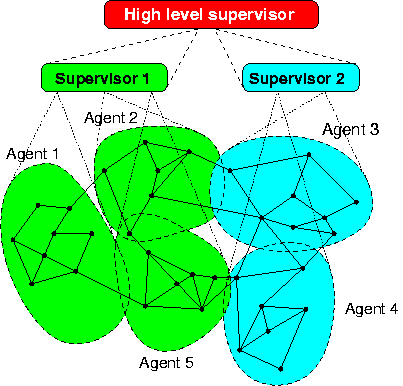
Figure 1: A schematic representation of a hierarchical multi-agent
control framework.
Power Networks. One particular area we focus on at the moment is
the control of power
networks. Due to the deregulation of the power market and the
participation of
more and more components in the power grid (e.g., wind mills, solar
panels, etc.), the power network cannot be controlled from a single,
centralized, point anymore. New control methods are necessary that
consider more localized control,
managed by a so-called multi-agent control structure, in which
communication of information and cooperation are central elements.
Current Research. Currently, methods for multi-agent control of
power networks based on
model predictive control are being developed in our group. These
methods are so far being tested on Matlab simulation studies with
small networks. Our methods need to be further developed and tested on
more realistic networks.
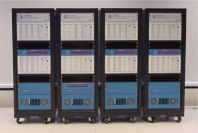
Figure 2: The real-time power network simulator.
Real-Time Super Simulator. The Electrical Power Systems group at
the EWI faculty owns one of the
largest power network simulation computers in the world. This super
computer can be used to simulate the complete power network
of the Netherlands in real time. It is therefore ideally suited to
examine state-of-the-art multi-agent control systems in more detail.
Concrete MSc Thesis Topics. Having this super computer in Delft
provides
the unique opportunity to
test developed multi-agent methods in almost real world power network
settings. Interesting practical thesis research can come from the
following directions:
- Investigation of current methods for the control of large-scale
power networks.
- Development of your own method for the control of these power
networks.
- Implementation of existing and/or your own control method on the
real-time simulator.
More theoretical thesis research can come from:
- Modeling of a large power network as a hybrid system, i.e.,
incorporating continuous dynamics (of power flow) and discrete dynamics
(of switches).
- Investigation of current methods for control of small scale hybrid
systems.
- Development of an extension of these methods to large-scale systems,
based on multi-agent concepts.
Of course, these topics are not fixed and can be varied according to
your own interests.
More General Thesis Topics. More general issues that we
look at within
the framework of our project, and of which a
selection can give rise to interesting MSc projects
are:
-
Given an overall system model, what are effective methods to
decompose the
overall system model into smaller subsystems that do no overlap each
other?
-
Given a set of smaller subsystems, what actions should an agent
be
able to
perform and to what information should it have access (through for
example
measurements and communication)?
- Given a set of agents with preconfigured communication and
action
skills,
how should a set of smaller subsystems be assigned to these agents?
- Given a set of agents with assigned subproblems, how should agents
interact
with each other such that the overall performance is optimal?
- The same questions can be posed when desiring a hierarchical
decomposition of
the system in which the subproblems may overlap each other (instead of a
completely decentralized, non-overlapping decomposition). When
hierarchies are considered, is there a higher performance than when
considering a totally decentralized architecture?
Solutions to the above problems may be found using techniques from
control
engineering, like model predictive control or hierarchical control,
and/or
techniques from computer science, like reinforcement learning, genetic
algorithms, or datamining.
More Information. If you are interested in selecting a project
connected to the
information above as your MSc project,
please come along or send us an email for more information, see Rudy
Negenborn or Bart
De Schutter. See also the official
project
description.
|